



In the heart of Provençal kitchens, where sun-dappled markets overflow with vibrant vegetables and fragrant herbs, a timeless culinary masterpiece simmers gently in rustic earthenware pots: ratatouille. More than just a humble stew, ratatouille is a festivity of simplicity and seasonality, an edible canvas that captures the essence of southern France’s rich terroir.This article peels back the layers of this beloved dish, uncovering the history, techniques, and artful balance that transform humble ingredients into a symphony of flavors. Join us as we unveil the secrets behind the classic French stew, inviting you to savor not only a recipe but a storied tradition that has delighted palates for generations.
Ratatouille Unveiled: The Art of Classic French Stew
Ratatouille unveiled delivers a timeless journey through the heart of Provençal cuisine, inviting food lovers to savor a stew that embodies rustic elegance and vibrant Mediterranean character. Originating from the humble kitchens of Nice, this vegetable medley has evolved from a simple farmer’s dish into a celebrated culinary masterpiece, cherished across the globe for its layered flavors and artful presentation.
Prep and Cook Time
- preparation: 30 minutes
- Cooking: 1 hour 15 minutes
- Total: 1 hour 45 minutes
Yield
Serves 6 generously as a main or 8 as a side
Difficulty Level
Medium: Requires attention to detail and patience, perfect for home cooks eager to refine their culinary skills.
ingredients
- 2 medium eggplants (about 1 lb), sliced into 1/4-inch rounds
- 2 medium zucchinis, sliced into 1/4-inch rounds
- 1 large yellow bell pepper, seeded and thinly sliced
- 1 large red bell pepper, seeded and thinly sliced
- 4 large ripe tomatoes, peeled, seeded, and chopped
- 1 large onion, finely diced
- 4 cloves garlic, minced
- 1/4 cup extra virgin olive oil, plus extra for drizzling
- 2 teaspoons Herbes de Provence, crushed
- Salt and freshly ground black pepper, to taste
- Fresh basil leaves, for garnish
Instructions
- Prepare the vegetables: Lightly salt the eggplant slices and place them in a colander for 20 minutes to draw out excess moisture and bitterness. Rinse and pat dry thoroughly.
- Sauté the onion and garlic: In a large skillet, heat 2 tablespoons olive oil over medium heat until shimmering. Add the onion and garlic; sauté until translucent and fragrant, about 5 minutes. Set aside.
- Cook the vegetables separately: In the same skillet, add a tablespoon of olive oil, cook eggplants until golden on both sides, approximately 5-6 minutes per side. Repeat this process with zucchini and bell peppers, cooking each just until tender, retaining their shape and color.
- Make the tomato sauce base: In a large ovenproof dish, combine chopped tomatoes, sautéed onions, garlic, Herbes de Provence, salt, and pepper. drizzle with olive oil and simmer gently on the stovetop for 10 minutes, stirring occasionally.
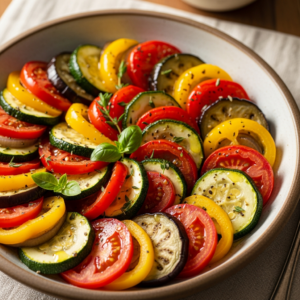
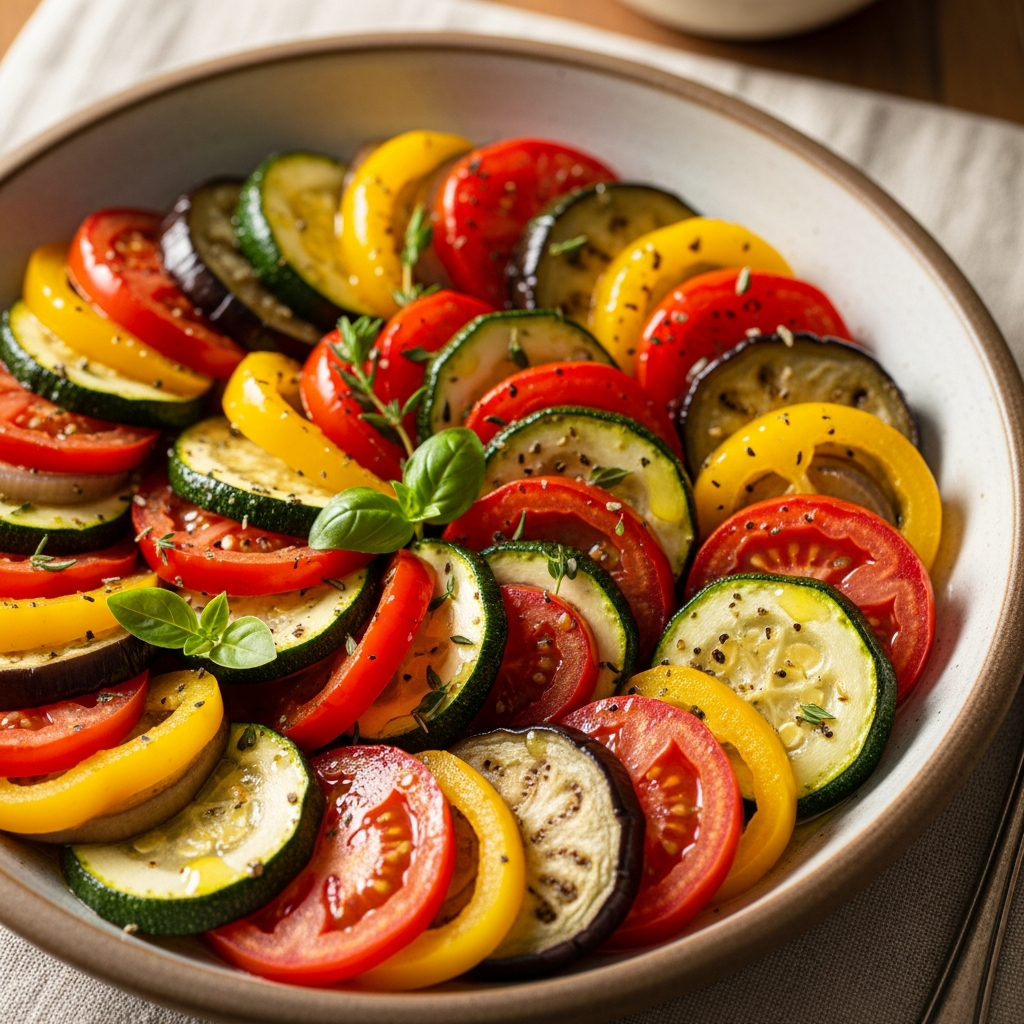
- layer the ratatouille: Preheat your oven to 350°F (175°C). Arrange the cooked vegetables over the tomato sauce in an alternating circular pattern or neat rows, overlapping slightly for an elegant presentation.
- bake to meld flavors: Drizzle remaining olive oil over the layered vegetables. Cover the dish with parchment paper or foil and bake for 40-45 minutes until the vegetables are tender and infused with the sauce’s aroma.
- Finish and garnish: Remove the cover during the final 10 minutes of cooking to deepen the color slightly. Let the ratatouille rest for 10 minutes once out of the oven, then garnish with fresh basil before serving.
Chef’s Notes
- Ingredient quality matters: Using firm,fresh eggplants and ripe tomatoes ensures the authentic depth of flavor indispensable in ratatouille unveiled.
- Control moisture: Salting eggplants removes bitterness and prevents watery texture,crucial for a balanced stew.
- Make ahead: This dish tastes even better the next day as flavors deepen. Store covered in the fridge for up to 3 days.
- Vegetable variations: Feel free to add a splash of lemon zest or sprinkle of smoked paprika for a subtle twist without overshadowing the classic profile.
Serving Suggestions
This ratatouille pairs exquisitely with crusty French bread or creamy polenta, providing a luscious contrast to its tender vegetables. For a heartier option, serve alongside grilled free-range chicken or pan-seared tofu to keep it vegetarian.
Garnish with a luminous sprig of fresh basil and a light drizzle of extra virgin olive oil to bring out the vibrant colors and aromas just before presenting at the table.

| Nutrient | Per Serving |
|---|---|
| calories | 160 kcal |
| Protein | 3 g |
| Carbohydrates | 18 g |
| Fat | 9 g |
Discover more rustic French delights in our collection of conventional Provençal recipes. For additional culinary history and professional techniques, visit the Institut Paul Bocuse.
Q&A
Q&A: Ratatouille Unveiled – The Art of Classic French Stew
Q1: What is ratatouille,and why is it considered a quintessential French dish?
A1: Ratatouille is a vibrant,slow-cooked vegetable stew originating from the Provence region of France. Celebrated for its harmony of fresh, summer vegetables-like tomatoes, eggplants, zucchinis, and bell peppers-ratatouille embodies the rustic yet refined spirit of French country cooking. Its medley of flavors and textures captures the essence of Mediterranean sunshine in every bite, making it a beloved staple in french cuisine.Q2: Which vegetables are key to a traditional ratatouille, and how do they contribute to its flavor profile?
A2: The cornerstone vegetables in ratatouille include eggplants (aubergines), zucchinis (courgettes), bell peppers, tomatoes, and onions. Each plays a vital role: eggplants provide a tender, almost creamy backdrop; zucchinis bring subtle sweetness and moisture; bell peppers add a crisp, slightly smoky note; tomatoes offer acidity and depth; and onions introduce a gentle caramelized sharpness. Together,they create a layered,balanced stew bursting with fresh,garden flavors.
Q3: What is the traditional technique to prepare ratatouille, and does it affect the stew’s texture?
A3: Traditional ratatouille involves gently sautéing each vegetable separately before combining them for slow simmering. This technique ensures that each vegetable retains its unique texture and flavor without becoming mushy or overshadowed. The slow cooking melds the flavors into a harmonious whole while preserving a delightful medley of textures-from tender to slightly firm-making each spoonful a textural adventure.
Q4: How does the use of herbs elevate ratatouille? which herbs are typically used?
A4: Herbs serve as the aromatic heart of ratatouille,deepening and brightening its flavor with fragrant complexity. Fresh thyme, bay leaf, and basil are classic choices, imparting woodsy, earthy, and sweet floral notes respectively. The herbs infuse their essence during the slow simmer, bringing a nuanced herbal warmth that transforms simple vegetables into a sophisticated stew.
Q5: Can ratatouille be served in diffrent ways beyond a simple stew?
A5: Absolutely! Ratatouille is a versatile delight. It can be served hot as a main or side dish, spooned over grains like rice or quinoa, or paired with crusty bread. For a more elegant presentation, it can be baked as a layered tian or incorporated into pasta dishes. Leftovers also make a fantastic filling for savory crepes or a topping for toasted baguette slices, proving ratatouille’s adaptability in the kitchen.
Q6: What makes ratatouille a healthy yet satisfying dish?
A6: Ratatouille shines as a nutrient-rich, plant-based dish brimming with vitamins, fiber, and antioxidants from its variety of vegetables. Its emphasis on fresh produce and slow cooking preserves nutrients while keeping fats and calories moderate, especially when prepared with a modest amount of olive oil. This combination makes ratatouille both wholesome and hearty, satisfying appetite and health in one hearty bowl.
Q7: Are there any common pitfalls to avoid when making ratatouille?
A7: One key pitfall is overcrowding the pan during sautéing, which can steam rather than caramelize the vegetables, leading to a less flavorful stew. Another is rushing the cooking process-ratatouille benefits enormously from patient, slow simmering that allows flavors to meld fully. Lastly, be mindful of seasoning; enough salt and herbs are essential to bring out the vibrant flavors without overwhelming the delicate balance.
Q8: How can a home cook personalize ratatouille while honoring its classic roots?
A8: While tradition is beautiful, ratatouille’s essence lies in celebrating fresh vegetables-and that invites creativity! Home cooks can adjust ratios of vegetables based on seasonal availability, add a dash of smoked paprika or a hint of garlic for extra depth, or experiment with herbs like oregano or marjoram.The key is to respect the stew’s slow-cooked,layered approach,ensuring new twists complement rather than overpower the timeless foundation.
Unlocking ratatouille’s secrets reveals more than a recipe-it offers a culinary journey through the heart of Provence, where simplicity and artistry simmer together in a colorful embrace.
The Conclusion
As the final simmer settles and the rich aroma of tender vegetables and herbs fills the air,ratatouille reveals itself not merely as a dish,but as a timeless testament to French culinary artistry. This humble stew, born from the sun-soaked gardens of Provence, invites us to celebrate simplicity, seasonality, and soulful cooking. Whether savored as a comforting meal or a vibrant canvas of flavors, ratatouille continues to inspire both chefs and home cooks alike-reminding us that, sometiems, the most exquisite masterpieces are crafted one vegetable at a time. So next time you gather your zucchinis,eggplants,and tomatoes,remember: you’re not just cooking; you’re unveiling a tasty piece of French heritage. Bon appétit!