

Few dishes embody the pinnacle of culinary artistry quite like Beef Wellington, and when it comes to this classic centerpiece, Gordon Ramsay’s version stands as the gold standard. Combining tender, succulent beef fillet with layers of earthy mushroom duxelles, savory pâté, and a crisp, buttery puff pastry, this recipe is as much a feast for the eyes as it is for the palate. But mastering Beef Wellington is no simple feat-it demands precision, patience, and an understanding of technique that transforms humble ingredients into a show-stopping masterpiece. In this article, we’ll guide you step-by-step through Ramsay’s iconic method, unlocking the secrets to creating your own restaurant-quality Beef Wellington and elevating your culinary skills along the way. Whether you’re a seasoned home cook or an adventurous beginner, prepare to embark on a flavorful journey that celebrates tradition, technique, and taste.
Mastering Gordon Ramsay’s Iconic Beef Wellington Recipe
Mastering Gordon Ramsay’s iconic Beef Wellington Recipe offers a journey into one of the most celebrated dishes in modern gastronomy. This dish blends the luxurious tenderness of a perfectly seared beef tenderloin with the earthy richness of duxelles, all elegantly wrapped in a crisp, golden puff pastry shell.Originating from classic British cuisine and popularized worldwide by renowned chefs like Ramsay, this culinary masterpiece is an exhilarating challenge that promises a breathtaking centerpiece for any special occasion.
Prep and Cook Time
- Planning Time: 45 minutes
- Cook Time: 35 minutes
- Resting Time: 10 minutes
- Total Time: 1 hour 30 minutes
Yield
Serves 6 elegantly satisfied guests.
Difficulty Level
Advanced – Ideal for confident cooks eager to refine technique and showcase culinary flair.
Ingredients
- 1 (2 to 2.5 lb) center-cut beef tenderloin (fillet), trimmed
- 2 tbsp olive oil
- 4 oz fresh chestnut mushrooms, finely chopped
- 2 shallots, minced
- 2 garlic cloves, crushed
- 2 tsp fresh thyme leaves
- 2 tbsp unsalted butter
- 6 slices of prosciutto
- 1/4 cup Dijon mustard
- 1 sheet of puff pastry, thawed but cold
- 1 large egg, beaten (for egg wash)
- Salt and freshly ground black pepper, to taste
Instructions
- Prepare the Tenderloin: Pat the beef tenderloin dry with kitchen paper and generously season every side with salt and pepper. Heat olive oil in a heavy skillet over high heat until shimmering. sear the beef for 2 to 3 minutes on each side until a deep, caramelized crust forms. Set aside to cool, then brush the entire fillet with Dijon mustard for that tangy, flavor-enhancing layer.
- Create the Duxelles: In the same pan,reduce heat to medium and add butter. Sauté the shallots and garlic until translucent and fragrant, about 2 minutes. Add finely chopped mushrooms and fresh thyme. Keep stirring, letting the mushrooms release their moisture and then cook until the mixture is dry and golden, about 8-10 minutes. Season with salt and pepper and allow to cool completely.
- Wrap with Prosciutto and Duxelles: Lay a large sheet of cling film on your work surface. Arrange prosciutto slices overlapping to form a rectangle large enough to wrap the beef. Spread a thin, even layer of duxelles over the prosciutto. Place the tenderloin on top, and using the cling film, carefully roll into a tight barrel shape.Twist ends of cling film to secure and chill for 30 minutes, helping the shape hold.
- craft the Puff Pastry Shell: Preheat your oven to 400°F (200°C). On a lightly floured surface, roll out the puff pastry sheet slightly larger than the wrapped tenderloin. Remove the cling film from the beef roll and place it in the center of the pastry. Brush edges of pastry with beaten egg to seal. Fold the pastry around the tenderloin, trimming any excess. Press edges to seal and place seam-side down on a baking tray lined with parchment paper.
- Decorate and Egg Wash: Use any leftover pastry to cut decorative shapes, gently attach with egg wash. Brush the whole pastry generously with beaten egg to achieve a shiny golden crust. Lightly score the surface with a sharp knife to create an elegant pattern without cutting through the pastry.
- Bake to Perfection: Bake in the preheated oven for 30 to 35 minutes or until pastry is golden and crisp. To achieve the ideal cooked interior-a rare to medium-rare tenderloin-use a meat thermometer inserted into the center to check for an internal temperature of 125°F to 130°F.
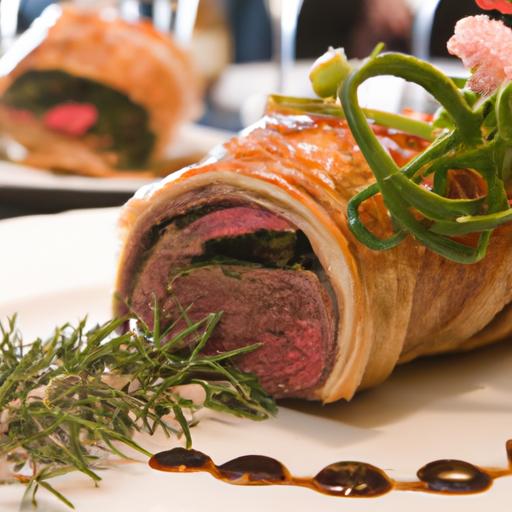
- Rest and Serve: After baking, allow the Beef Wellington to rest for 10 minutes. This resting period redistributes juices,ensuring each slice bursts with moist tenderness. Slice carefully with a sharp knife, revealing the stunning cross-section of pink beef, savory duxelles, and golden pastry.
Tips for Success with Mastering Gordon Ramsay’s iconic Beef Wellington Recipe
- Beef Selection: Always choose a high-quality center-cut beef tenderloin. Maintaining uniform thickness helps the beef cook evenly.
- Duxelles Moisture: Ensure the mushroom mixture is dry to prevent soggy pastry. Low and slow sautéing is key to evaporate all moisture.
- Chilling Before Baking: Wrapping and chilling the tenderloin in prosciutto and duxelles allows everything to firm up, making the pastry wrapping easier and more precise.
- Pastry Handling: Keep the puff pastry cold at all times to preserve flakiness. Avoid overhandling or rolling too thin to maintain its delicate layers.
- Use of Thermometer: A meat thermometer is indispensable for perfectly cooked beef. Overbaking can dry out the tenderloin and defeat the purpose of this refined dish.
- Make-Ahead: Prepare duxelles and sear beef up to a day in advance. Assemble and bake just before serving to save time and reduce stress.
Serving Suggestions
Present this iconic dish with a flourish-slice the Beef wellington into thick medallions to reveal its stunning layers. Serve with a drizzle of rich red wine reduction or a classic Madeira sauce (see our recipe for Madeira sauce). Complement with buttery mashed potatoes,tender steamed asparagus,and a garnish of fresh thyme sprigs. For a striking presentation, plate on a dark platter to contrast with the golden pastry and vibrant pink center.

| Nutrient | Amount per serving |
|---|---|
| Calories | 620 kcal |
| Protein | 45 g |
| Carbohydrates | 25 g |
| Fat | 38 g |
For further inspiration on british classics with a modern twist, check our article on The Art of Perfect Scotch Fillet Steak. to deepen your culinary knowledge on beef cuts, visit National Beef Association.
Q&A
Q&A: Mastering Gordon Ramsay’s Iconic Beef Wellington Recipe
Q1: What makes Gordon Ramsay’s Beef Wellington so iconic and sought after?
A1: Gordon Ramsay’s Beef Wellington is a masterclass in culinary elegance-a perfect harmony of tender beef fillet, earthy mushroom duxelles, and flaky puff pastry. It’s iconic because it balances rich flavors with complex technique, creating a centerpiece that’s as visually stunning as it is flavorful. The skill required to cook each component to perfection makes this recipe a benchmark for aspiring chefs.
Q2: What cut of beef is best for Beef Wellington, and why?
A2: The tenderloin, or beef fillet, is the star of the show. its buttery texture and mild flavor allow it to shine under the layers of mushroom duxelles and pastry, while remaining tender and juicy after roasting. Choosing a cut without excessive fat or sinew ensures that every bite melts in your mouth.
Q3: How important is the mushroom duxelles, and what role dose it play?
A3: The mushroom duxelles is crucial-it adds moisture, depth, and an umami punch that complements the beef.Finely chopped mushrooms, sautéed with shallots and herbs, become a rich paste that seals the meat and prevents the pastry from getting soggy. Its earthiness balances the meat’s savoriness and gives the Wellington its signature flavor.
Q4: What are the key steps to ensure the puff pastry comes out perfectly crispy and golden?
A4: Achieving a perfectly crisp pastry requires chilling at several stages to prevent the butter in the dough from melting prematurely. Wrapping the Wellington tightly but not too thickly keeps the layers delicate. Brushing with egg wash before baking gives the pastry its beatiful golden sheen.baking at a high temperature initially sets the shape and creates that flaky texture.
Q5: How do you prevent the beef from overcooking while baking the Wellington?
A5: Searing the beef fillet before wrapping it in pastry creates a flavorful crust and helps lock in juices. Monitoring the internal temperature is key-aim for medium-rare (about 125-130°F or 52-54°C) as it will continue to cook slightly while resting. Resting the Wellington after baking redistributes juices and ensures tenderness.
Q6: Are there any tips for assembling the Beef Wellington to avoid common pitfalls?
A6: Absolutely! frist, ensure that all components are dry-excess moisture can cause soggy pastry.Use cling film to help roll the Wellington tightly without tearing the pastry. Avoid overstuffing; less is more when it comes to fillings. Lastly, chill the wrapped Wellington before baking so it holds its shape and cooks evenly.
Q7: Can this recipe be adapted for a dinner party or special occasion?
A7: Indeed! Beef Wellington is the ultimate showstopper. For a dinner party, consider preparing individual mini wellingtons for elegant plating. pairing the dish with sides like roasted seasonal vegetables or creamy mashed potatoes balances richness with freshness, making for a memorable feast.
Q8: How can a home cook build confidence tackling Gordon Ramsay’s beef Wellington?
A8: Start by mastering each element individually-the perfect sear on the beef, making a silky mushroom duxelles, and handling puff pastry. Practise patience: this dish rewards precision and timing. Watching step-by-step tutorials and reading through the recipe multiple times helps. Remember, cooking isn’t just about perfection-it’s about bold flavor and joyful creation.
Q9: What kitchen tools will make preparing Beef Wellington easier?
A9: A sharp chef’s knife is essential for fine chopping mushrooms and trimming the beef. A heavy skillet for a rapid,even sear,and a reliable meat thermometer to monitor doneness are invaluable. Parchment paper or cling film aids in rolling, and a baking tray with a wire rack helps the pastry cook evenly.
Q10: How does mastering Beef Wellington benefit an aspiring chef or home cook?
A10: Beef Wellington is a rite of passage-combining searing, sautéing, careful assembly, and baking techniques into one dish. Mastering it builds confidence, knife skills, and an understanding of balancing textures and flavors. Beyond the plate, it cultivates patience and finesse, qualities that elevate all culinary pursuits.
The Way Forward
As you close the chapter on mastering Gordon Ramsay’s iconic Beef Wellington, remember that this dish is more than just a recipe-it’s a culinary journey that melds precision, passion, and patience. With each buttery puff pastry layer and perfectly seared filet, you’re not only crafting a meal but honoring a tradition of elegance and technique. Whether you’re serving it to celebrate a special occasion or simply to elevate your everyday dinner, Beef Wellington remains a timeless testament to the art of cooking. so sharpen your knives, preheat your oven, and step confidently into the kitchen-as now, you’re ready to create a masterpiece worthy of Ramsay himself.