

Beneath the bustling street markets and vibrant alleyways of Thailand lies a culinary treasure that has captured the hearts-and taste buds-of food lovers around the world: Pad Thai. More than just a plate of stir-fried noodles, this iconic dish tells a story of cultural fusion, history, and tradition wrapped into every savory bite. In “Pad Thai Unwrapped: The Story Behind Thailand’s Iconic Dish,” we embark on a flavorful journey to uncover how this beloved dish evolved from humble street food to global phenomenon, exploring the ingredients, influences, and narratives that make Pad Thai much more than the sum of its parts. Prepare to dive into a rich tapestry of taste, history, and Thai heritage that has made Pad Thai a symbol of national pride and international delight.
Pad Thai Unwrapped is a culinary journey that invites you to immerse yourself in the vibrant tapestry of Thailand’s street food culture, where the balance of sweet, heat, and sour flavors creates an unforgettable sensory experience. This dish, beloved worldwide, is a humble stir-fry that tells stories of bustling Bangkok markets and home kitchens passed down through generations.
The magic of Pad Thai hinges on mastering the delicate harmony of its ingredients: the brightness of tamarind, the kick of chili, the subtle sweetness of palm sugar, and the freshness of crunchy bean sprouts all tossed with tender rice noodles and plump shrimp or tofu. unlocking these authentic flavors at home is not just a recipe – it’s an art form that transforms the everyday into an exceptional plate.
Prep and Cook Time
- Planning: 15 minutes
- Cooking: 10 minutes
- Total time: 25 minutes
Yield
Serves 4 hearty portions.
Difficulty Level
Medium – perfect for adventurous home cooks eager to replicate authentic flavors.
Ingredients
- 200g (7 oz) dried rice noodles (soaked in warm water for 20 minutes)
- 2 tbsp vegetable oil
- 200g (7 oz) medium shrimp,peeled and deveined (or firm tofu,cubed)
- 3 garlic cloves,finely minced
- 2 large eggs
- ½ cup firm tofu,cubed (optional,for extra texture)
- 1 cup fresh bean sprouts,washed and drained
- 3 spring onions,chopped (white and light green parts)
- ¼ cup crushed roasted peanuts
- 2 tbsp tamarind paste
- 3 tbsp fish sauce (or substitute with soy sauce for vegetarian)
- 1 tbsp palm sugar (or brown sugar)
- 1 tsp chili flakes (adjust to heat preference)
- 1 tbsp lime juice (freshly squeezed)
Instructions
- Prepare the rice noodles: Soak noodles in warm water for 20 minutes until pliable but still firm. Drain well and set aside.
- make the sauce: In a small bowl, combine tamarind paste, fish sauce, palm sugar, and lime juice. Stir until sugar dissolves completely. this sauce is the heart of authentic Pad Thai.
- Sauté aromatics and protein: Heat vegetable oil in a large wok over medium-high heat. Add garlic and sauté until fragrant, about 30 seconds. Add shrimp (or tofu) and cook until shrimp turn pink and opaque or tofu crisps up lightly, about 2-3 minutes.
- Cook the eggs: Push shrimp/tofu to the side of the wok. Crack eggs into the empty side and gently scramble until just set, then mix everything together.
- Add noodles and sauce: Toss the drained noodles into the wok. Pour the tamarind sauce over the noodles and stir vigorously to coat. Stir-fry for 2-3 minutes until noodles are tender and sauce is evenly absorbed.
- Finish with fresh ingredients: Stir in bean sprouts and spring onions. Toss quickly just to combine and warm through-about 1 minute. Avoid overcooking to keep fresh crunch and brightness.
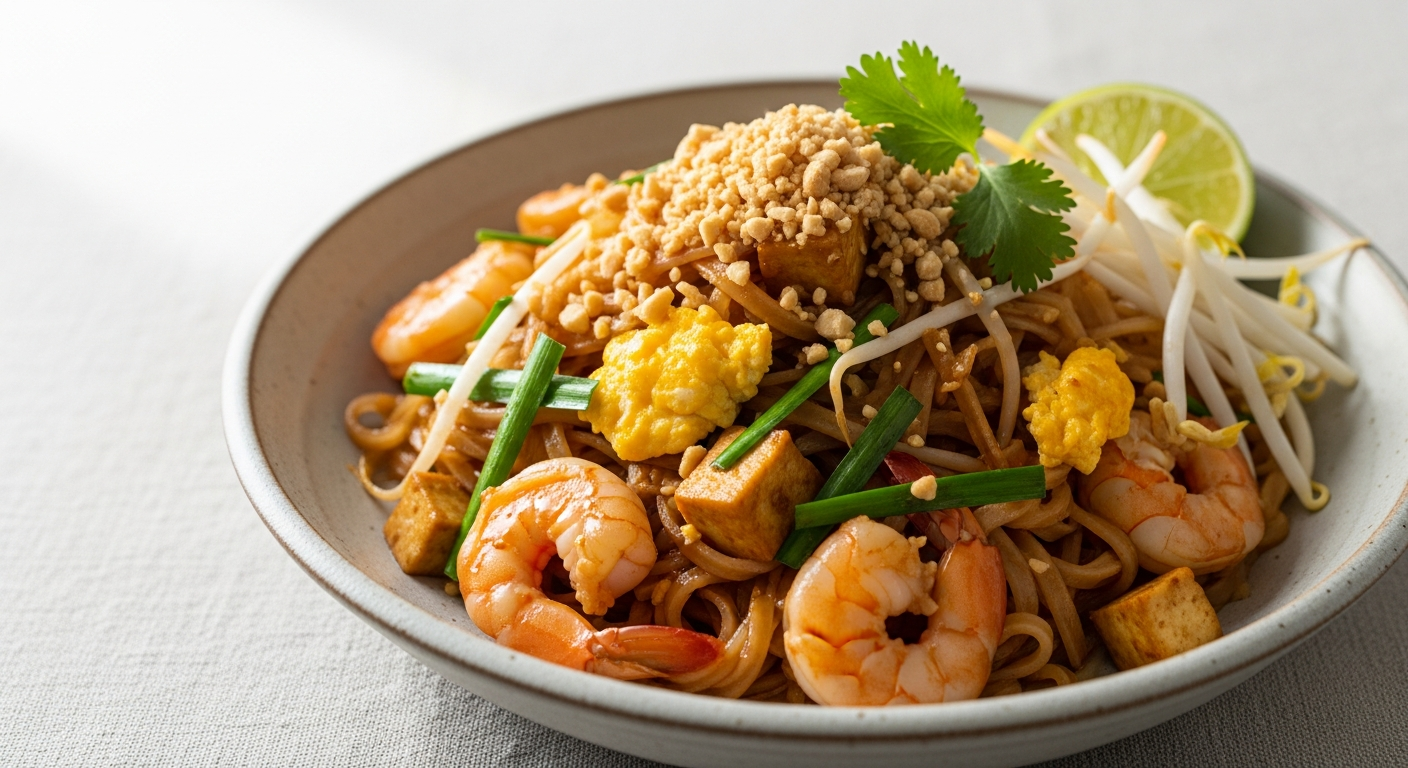
- Plate and garnish: Transfer to serving plates, sprinkle with crushed roasted peanuts and chili flakes for extra texture and kick. Add lime wedges on the side for that final zesty pop.
Tips for Success
- Soak noodles properly: Noodles should be softened but not mushy. If too soft, they’ll break and lose their signature chewiness.
- Fresh tamarind paste: Essential for that authentic tangy-sour note. avoid bottled sauces with additives, or make your own by soaking tamarind pulp in warm water and straining.
- Adjust sweetness and heat: Taste as you go; Pad Thai’s beauty is in its harmony. Add more palm sugar for sweetness or chili flakes for spice.
- protein versatility: Shrimp and tofu work beautifully, but chicken breast or thinly sliced beef can be delicious alternatives.
- Prep everything before cooking: Stir-frying is fast-paced, so have all ingredients measured and ready to ensure smooth cooking.
- Make ahead: Sauce can be prepared up to 3 days ahead and stored refrigerated, intensifying flavors.
Serving Suggestions
Present Pad Thai on a vibrant ceramic plate to reflect the dish’s bright colors. garnish with fresh lime wedges, extra chopped peanuts, and finely sliced red chilies for those who crave more heat. Serve alongside Thai fresh spring rolls for a refreshing appetizer, or a light cucumber salad to contrast the stir-fry’s richness.
| Nutrient | Per Serving |
|---|---|
| Calories | 420 kcal |
| Protein | 25 g |
| Carbohydrates | 50 g |
| Fat | 12 g |
Discover more about the foundational elements of Southeast Asian cooking in our Serious Eats guide to Pad Thai.
Q&A
Q&A: Pad thai unwrapped: The Story Behind Thailand’s Iconic Dish
Q1: What makes Pad thai such an iconic dish in Thailand?
A: Pad Thai embodies the perfect balance of flavors-sweet, sour, salty, and umami-all melded in a stir-fried noodle harmony. It’s not just a dish; it’s a symbol of Thailand’s culinary ingenuity and adaptability, representing decades of cultural history wrapped in every savory bite.
Q2: Where did Pad Thai originate,and how did it become popular?
A: Pad Thai emerged during the 1930s and 1940s,under the leadership of Thailand’s Prime Minister Plaek Phibunsongkhram,who promoted it as a patriotic national dish. It was introduced as an affordable street food that unified various culinary influences, helping to foster national pride while addressing food scarcity during wartime.
Q3: What are the core ingredients that define authentic Pad Thai?
A: At its heart, authentic Pad Thai features rice noodles, tamarind paste (for tanginess), fish sauce or soy sauce (for saltiness), palm sugar (for sweetness), eggs, and a medley of fresh proteins like chicken, tofu, or seafood. It’s finished with crushed peanuts, fresh lime wedges, bean sprouts, and aromatic chives that deliver a delightful texture and flavor contrast.
Q4: How does the cooking technique affect the final taste of Pad Thai?
A: Stir-frying Pad Thai over high heat is essential-it creates that subtle smoky aroma called wok hei, or “breath of the wok.” This technique quickly caramelizes the sauce and lightly chars the noodles, deepening the flavors while preserving the dish’s signature chewy texture and vibrant freshness.
Q5: beyond the dish itself, what cultural significance does Pad Thai hold in Thailand?
A: Pad thai is a culinary ambassador, telling a story of resilience and unity. It represents an era when creativity met necessity-when street vendors transformed simple ingredients into a dish beloved across classes and regions. Today, it remains a street food staple and a proud emblem of Thailand’s rich food heritage.
Q6: can Pad Thai be adapted for different dietary preferences without losing its essence?
A: Absolutely.The beauty of Pad Thai lies in its versatility.Vegetarian versions swap fish sauce for tamari or mushroom soy sauce, and proteins like tofu or tempeh take center stage. What remains constant is the harmony of flavors and textures-the soul of Pad Thai that transcends any modification.
Q7: Why do crushed peanuts and lime wedges play a crucial role in serving Pad Thai?
A: Crushed peanuts add a delightful crunch and a nutty depth that contrasts the soft noodles and tender proteins. Lime wedges introduce an invigorating citrus burst, cutting through the richness and uplifting the overall flavor profile. Together, they create a multi-dimensional taste experience that makes Pad Thai so memorable.
Q8: How has Pad Thai evolved as it has traveled beyond Thailand’s borders?
A: Internationally, Pad thai has embraced global influences, incorporating new ingredients and varying spice levels. While some nuances shift, most versions strive to maintain the dish’s essential flavor balance. This adaptability has contributed to Pad Thai’s worldwide acclaim, making it a beloved ambassador of Thai cuisine around the globe.
Q9: What is a common misconception about Pad Thai?
A: Many believe Pad Thai’s main star is peanut sauce or that it’s an ancient recipe passed down unchanged for centuries. In reality, Pad Thai is a relatively modern creation, crafted in response to historical circumstances. Also, peanut sauce is actually not part of traditional Pad Thai but often mistaken as a key component due to Western adaptations.
Q10: If someone wants to try making Pad Thai at home, what’s the most important tip to remember?
A: Master the sauce balance and don’t over-soak your rice noodles! The sauce should harmonize tamarind’s tartness, palm sugar’s sweetness, and fish sauce’s saltiness. Also, stir-fry quickly on high heat to achieve that signature texture and aroma. Fresh ingredients and patience make all the difference in recreating an authentic Pad Thai experience.
Final Thoughts
As the final strands of Pad Thai are twirled and the vibrant flavors linger on the palate, we come to appreciate that this beloved dish is far more than just a meal. It is a delicious tapestry woven from history, culture, and the ingenuity of a nation steadfast to define its culinary identity. From humble street stalls to global tables, Pad Thai tells a story of resilience, adaptation, and the unifying power of food. So next time you savor those savory bites, remember: you’re not just enjoying a dish-you’re tasting a flavorful chapter of Thailand’s rich cultural heritage, lovingly unwrapped.